



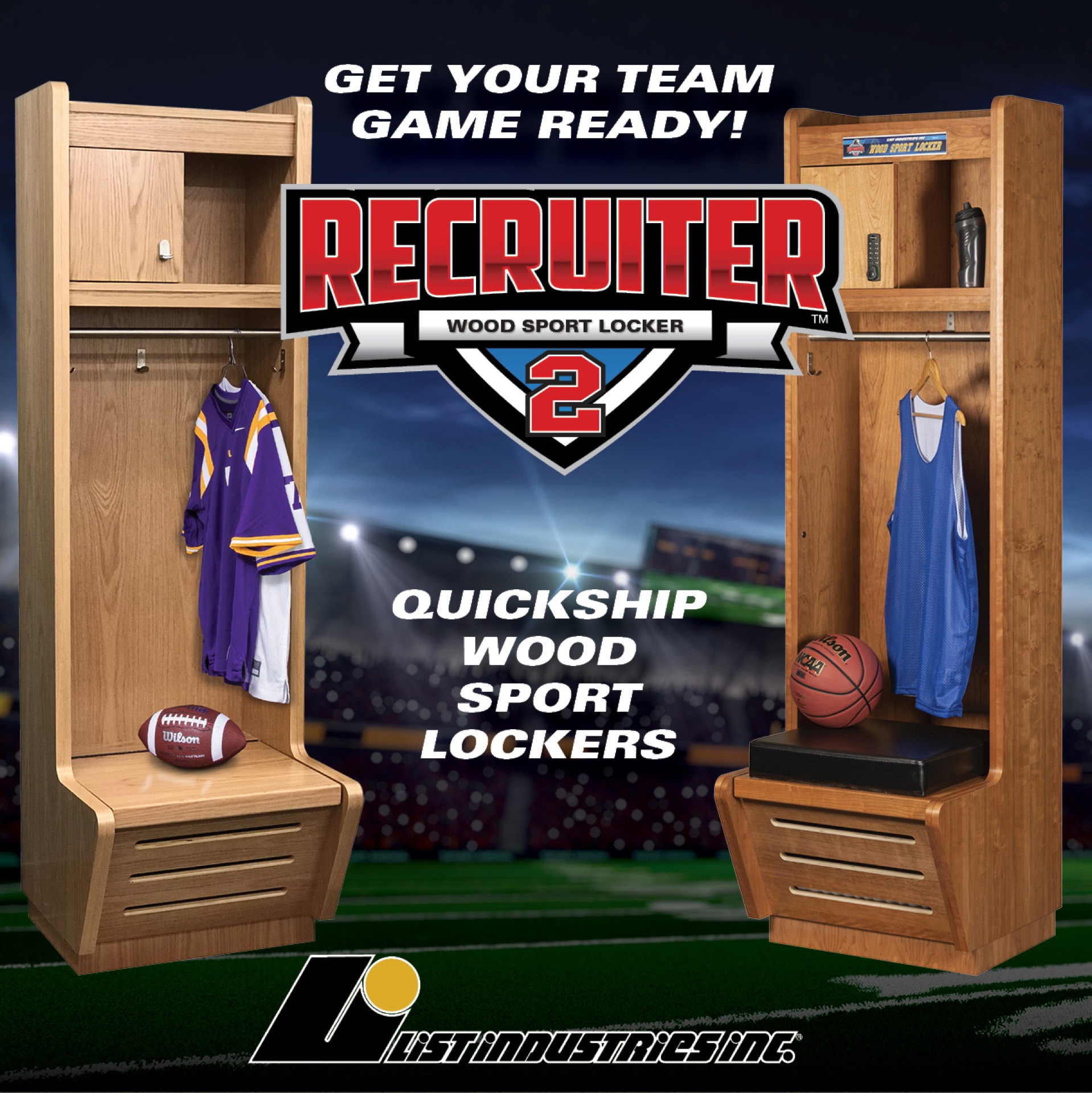
From environmentally responsible materials to smart-lock technology and branded interiors, locker systems now sit at the intersection of operational efficiency and student expectation. For facility managers, this evolution presents both opportunity and complexity. Choosing the right locker solution requires balancing sustainability goals, lifecycle performance, user experience, and long-term return on investment.
As a leading manufacturer working closely with higher education institutions across the country, List Industries brings a practical, forward-looking perspective to these decisions.
Part 1: “Green” Locker Construction
Material Selection & Sustainability
The market has shifted significantly toward materials that offer both sustainability and durability. High-density polyethylene (HDPE), recycled steel, and powder-coated metal lockers are leading options due to their long lifecycle and resistance to harsh environments.
Compared to traditional wood lockers—which can degrade quickly in humid athletic settings—HDPE and metal lockers provide superior lifecycle performance with minimal maintenance. Recycled content steel in particular offers a strong sustainability profile while maintaining structural integrity over decades.
Facility managers should evaluate materials holistically. Recycled content is important, but durability ultimately determines environmental impact. A locker that lasts 30 years is far more sustainable than one replaced every 10.
Rapidly renewable materials and FSC-certified wood can play a role in low-moisture environments, but in recreation and athletic facilities, recycled HDPE and steel tend to provide the best balance of sustainability and performance.
LEED & Certification Alignment
Locker systems can contribute to LEED v4.1 certification through several avenues, including recycled content, regional sourcing, and low-emitting materials. Selecting lockers with verified environmental documentation helps institutions capture points while supporting broader sustainability goals.
Facility leaders should look beyond LEED and request Environmental Product Declarations (EPDs), Health Product Declarations (HPDs), and GREENGUARD certifications. These provide transparency about material composition, environmental impact, and indoor air quality performance.
Indoor Environmental Quality
Locker materials play a critical role in indoor air quality—especially in athletic facilities where ventilation demands are already high. Low-VOC finishes, powder coating, and inert materials like HDPE help minimize off-gassing and contribute to healthier indoor environments.
This is particularly important in enclosed locker rooms where air circulation can be limited and occupant density is high.
Durability & Lifecycle Cost
When institutions shift from cost-first thinking to lifecycle cost analysis, the value of “green” lockers becomes much clearer. Durable materials reduce replacement frequency, minimize maintenance, and lower total cost of ownership.
Moisture resistance, corrosion protection, and chemical durability are key considerations. Lockers must withstand daily exposure to sweat, cleaning agents, and humidity without degrading. Materials like HDPE and powder-coated steel excel in these conditions, maintaining both performance and appearance over time.
Selecting Lockers for Renovation Projects
In renovation projects, sustainable locker systems can be integrated with minimal disruption by designing around existing footprints and infrastructure. Modular locker systems are particularly effective, allowing for phased installation and reduced demolition waste.
Additionally, selecting long-lasting materials during renovation helps prevent future tear-outs, further reducing environmental impact.
Institutional Branding & ESG
Sustainability-focused locker installations are increasingly tied to broader ESG (Environmental, Social, Governance) initiatives. Institutions are using these upgrades to demonstrate environmental stewardship to students, parents, and donors.
Locker systems with verified sustainable attributes can support reporting efforts while reinforcing a campus-wide commitment to responsible design and operations.
Part 2: Locker Design for Sport, Recreation & Fitness Facilities
Evolving User Expectations
Over the past decade, student expectations have shifted dramatically. Today’s students expect locker rooms to reflect the same level of design and comfort found in high-end fitness centers and professional athletic facilities.
Essential elements now include clean aesthetics, durable finishes, integrated technology, adequate ventilation, and thoughtful lighting. Comfort, privacy, and convenience are baseline expectations.
Recruitment & Retention Impact
Well-designed locker rooms have become a powerful tool in recruitment and retention. For student-athletes, the locker room is a daily-use space that directly impacts their experience.
Many elite institutions now highlight locker rooms during campus tours, using them as a visual representation of investment in student life and athletics. A modern, well-designed facility can be a deciding factor for prospective students.
Layout & Space Optimization
Effective locker room design balances density with comfort. Best practices include clear circulation paths, strategic bench placement, and locker configurations that maximize vertical space without creating a cramped environment.
There is also growing demand for privacy. Facilities are increasingly incorporating a mix of open team areas and private changing spaces to accommodate diverse user preferences.
Technology Integration
Technology is rapidly transforming locker systems. Digital locks, smart access control, and mobile credentialing are becoming standard in new installations.
These systems enhance security, reduce administrative burden, and improve user convenience. When designing locker rooms, it’s critical to plan for future upgrades by incorporating flexible infrastructure—such as power access and adaptable lock systems.
Durability & Performance
In high-traffic environments, durability is paramount. Locker construction features such as reinforced doors, continuous hinges, and corrosion-resistant finishes significantly impact long-term performance.
Selecting materials that resist dents, scratches, and moisture ensures the facility maintains a high-quality appearance while minimizing maintenance costs.
Branding & Aesthetics
Locker rooms are increasingly being used as extensions of institutional branding. Schools are incorporating colors, logos, custom laminates, and integrated lighting to create visually impactful environments.
Architectural elements—such as coordinated flooring, wall finishes, and lighting design—help unify the space and elevate the overall experience. The result is a locker room that not only functions well but also tells a story about the institution’s identity and values.
Final Thought
Locker systems have evolved far beyond simple storage solutions. They are now integral components of campus infrastructure—supporting sustainability goals, enhancing student experience, and reinforcing institutional brand.
For facility leaders, the challenge is no longer whether to invest in better locker systems, but how to choose solutions that deliver lasting value across every dimension—from environmental impact to user satisfaction.